‘Terrified Before…’: Shefali Shah Opens Up on Playing a New Side of Vartika in Delhi Crime Season 3
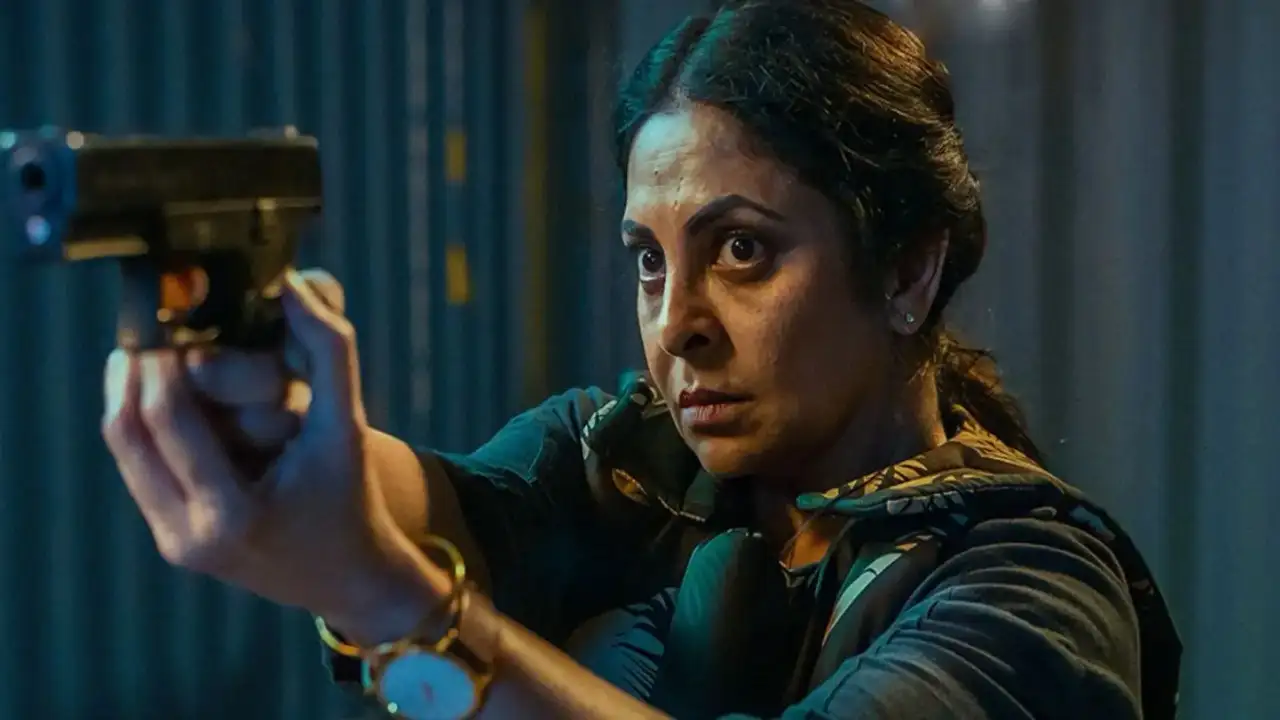
For years, Shefali Shah’s portrayal of DCP Vartika Chaturvedi in Delhi Crime has stood as one of the most powerful and emotionally grounded performances in Indian streaming history. But with Season 3, the acclaimed actress faced an unexpected whirlwind of fear, doubt, and emotional vulnerability. In a rare and deeply honest revelation, Shefali shared that she was “terrified before” the season’s release — unsure whether the audience would accept a radically different side of Vartika.
Her confessions offer a unique window into the mind of an actor known for her precision, intensity, and understated brilliance. And they highlight just how personally challenging Season 3 was for her, both as an artist and as a human being.
A New Vartika: Quiet Grief Instead of Commanding Strength
In the previous seasons, Vartika Chaturvedi was the determined, authoritative, fiercely disciplined face of the Delhi Police. She embodied strength through decisiveness, leadership, and moral clarity. But Season 3 pushed the character — and the actress — into new emotional territory.
Shefali revealed that the Vartika we see this time is not driven by the dramatic intensity or procedural command that defined the earlier seasons. Instead, she carries quiet grief, internalised pain, and a fragile emotional landscape that she rarely allows others to witness.
“There was no bravado this time,” Shefali explained. “It was all perseverance and an unshakeable commitment to save the girls, protect them, and find justice — but it came from a very different place. She isn’t shouting orders or displaying authority. She’s absorbing everything, holding it inside, and continuing the fight.”
This shift was crucial to the season’s story, which deals heavily with human trafficking, generational trauma, and the psychological wounds that such crimes leave behind. For Vartika, the case isn’t merely a professional challenge — it becomes a deeply personal, emotionally scarring journey.
What makes this transformation of Vartika particularly compelling is how subtly it is executed. Instead of dramatic breakdowns or visible emotional outbursts, the character’s pain is expressed through silences, pauses, and restrained expressions. This required a complete recalibration of performance style for Shefali Shah, who had to convey depth without relying on overt emotional cues. The camera lingers on her face longer than before, allowing viewers to read what is left unsaid — a creative choice that places immense responsibility on the actor to communicate through nuance rather than dialogue. Such an approach demands not only technical mastery but also emotional authenticity, something Shefali is widely known for.
The writing of Delhi Crime Season 3 also plays a significant role in shaping this new Vartika. The narrative deliberately avoids glorifying heroism in the traditional sense. Instead, it focuses on the toll that such work takes on those who carry it out. Vartika is not portrayed as invincible; she is human, affected, and at times, visibly burdened by what she witnesses. This shift aligns with the evolving storytelling landscape in Indian streaming content, where characters are increasingly layered and realistic. For Shefali, embracing this change meant stepping away from the comfort of established traits and allowing the character to evolve organically, even if it meant risking audience expectations.
Shefali’s Fear: “I Wasn’t Sure If I Could Pull It Off”
Despite being widely regarded as one of India’s finest performers, Shefali Shah openly admitted that she was unsure if she could portray this vulnerable version of Vartika convincingly. And that fear lingered even after filming wrapped.
She confessed that she often experiences impostor syndrome — the fear that her success is accidental or undeserved. Stepping into Season 3 reignited that anxiety.
“Every time I take on a role, I feel like this might be the moment where people realise I’m not good enough,” she said. “I worry I might freeze, forget everything, or just fail to deliver what the character demands.”
For her, acting has never been a mechanical skill or a learned method. She doesn’t rely on rehearsed formulas or predictable techniques. Everything comes from instinct — and instinct, by nature, brings uncertainty.
She explained that every new character feels like starting from scratch, like facing a blank slate with no tools. “If I ever feel that I completely know how to do this, that’s the day I should stop acting,” she said. “The fear keeps me honest. It keeps me grounded.”
Another dimension of Shefali’s fear stemmed from the unpredictability of audience perception. When a character becomes iconic, any deviation can be met with resistance. She was acutely aware that viewers had developed a strong connection with Vartika as a decisive, authoritative officer. Presenting a quieter, more introspective version risked being misunderstood as weakness or inconsistency. This fear of misinterpretation weighed heavily on her, as she wanted to remain truthful to the character while also respecting the audience’s emotional investment.
Shefali also spoke about the loneliness that often accompanies an actor’s process. Despite being surrounded by a team, the responsibility of performance ultimately rests on the individual. She described moments before shooting intense scenes where she felt completely isolated, unsure of whether she would be able to access the emotional depth required. This internal struggle, she explained, is something actors rarely discuss openly. It is not just about memorising lines or hitting marks; it is about surrendering oneself to the character’s emotional world, which can be both exhausting and intimidating. Her willingness to acknowledge this vulnerability adds another layer of authenticity to her craft.
The Weight of Expectations
Part of her anxiety came from the immense expectations placed upon Delhi Crime. The series has earned international recognition, a massive global audience, and even an International Emmy Award. Being the face of such a franchise is an honor — but also a heavy burden.
Shefali revealed that with each season, the pressure only increases. Not only does she fear disappointing the audience, but she also worries about letting down the character she has grown deeply attached to. Vartika has become more than a role for her — she is a responsibility.
“People see Vartika as a symbol of integrity, justice, and compassion,” she said. “And that’s a big thing to carry. I never want to break the trust viewers have in her.”
That trust, she feared, might be shaken if audiences did not appreciate the subdued, quietly suffering Vartika of Season 3.
This global visibility brings with it a unique kind of pressure. Shefali revealed that she often feels the need to match or surpass her previous performances, which can be an overwhelming expectation to place on oneself. The success of earlier seasons, while gratifying, also creates a standard that becomes increasingly difficult to maintain. She described this as a double-edged sword — the recognition is rewarding, but it also raises the stakes with every new installment. Balancing these expectations while staying true to her instincts is a challenge she continues to navigate with humility and dedication.
The Real Horror Behind the Scenes
Season 3 explores the traumatic world of trafficking and the exploitation of vulnerable young girls. The narrative is rooted in heartbreaking real-life cases, and for Shefali, immersing herself in this subject was emotionally draining.
She revealed that during her research and preparation, she learned about the cycles of trauma — how abuse repeats across generations, how victims are silenced, and how justice is often delayed or denied. Portraying a police officer who has to confront such trauma while remaining functional required intense emotional control.
She shared that she often had to mentally “guard herself” on set. Certain scenes involving children were especially painful. “It becomes very hard not to break,” she said. “But Vartika doesn’t get to collapse. She has to stay strong. That’s what makes playing her so challenging.”
Overwhelmed by the Audience’s Response
Once the season released, Shefali watched viewers react with overwhelming empathy and understanding — and that moved her deeply. She admitted that she cried while reading reviews and messages from fans who appreciated this quieter, more vulnerable Vartika.
She said that she felt “overjoyed and weeping with relief” when she realised that audiences not only accepted but embraced this new version of the character. Many viewers expressed that Vartika’s emotional restraint and inner turmoil felt more real, more human, and more relatable than ever before.
For Shefali, this acceptance meant the world.
“You didn’t just watch her,” she said of the viewers.
“You felt her. You rooted for her. You understood her silence.”
The audience’s warmth, she said, reminded her of two things:
- That viewers are far more perceptive and emotionally intelligent than actors sometimes assume.
- That she is truly blessed to receive such love and support.
A Gratitude-Filled Reflection
Shefali ended her emotional reflections by thanking every single viewer who watched, understood, and supported Delhi Crime Season 3. She expressed gratitude not just as an actor, but as someone who poured her heart into a story that deals with brutal realities.
“To every person who reached out, who watched the show with an open heart, who felt what Vartika felt — thank you,” she said. “Your love gives me strength.”
The Power of Vulnerability
Shefali Shah’s honesty about her fear, doubt, and emotional struggle makes her portrayal of Vartika even more meaningful. Vulnerability is rare in a world of glamor and celebrity — and her willingness to share it only deepens the impact of her performance.
In Delhi Crime Season 3, Vartika Chaturvedi is not just a police officer. She is a woman carrying pain, compassion, and a relentless sense of duty. And Shefali Shah, facing her own fears behind the scenes, brings that complexity to life with remarkable truth.
Her journey — both on-screen and off — reminds us that courage is not the absence of fear, but the decision to push forward despite it.