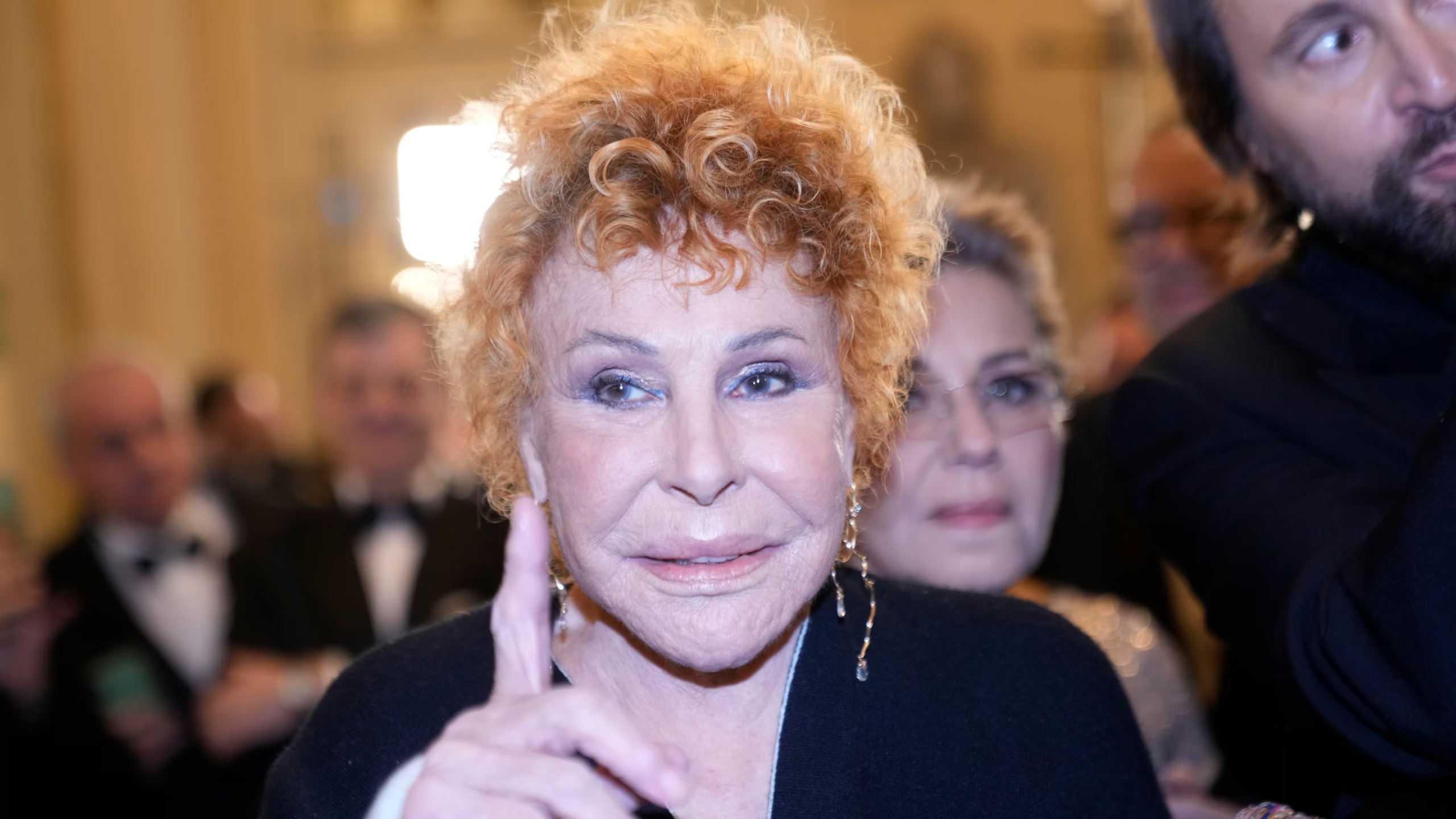
Italian music is in mourning today with the passing of Ornella Vanoni, one of the country’s most beloved voices. She died on November 21, 2025, at her home in Milan, at the age of 91, following a cardiac arrest.
Vanoni’s death marks the end of an extraordinary career that spanned more than seven decades. She was more than just a singer — she was a storyteller, a legend, and a defining figure in Italian pop and jazz music.
Early Life
Born in Milan on September 22, 1934, Vanoni came from a prosperous background. She received a cosmopolitan education, studying in Switzerland, England, and France, and learned several languages.
Her artistic journey began in theater: she trained at Milan’s Piccolo Teatro under the direction of Giorgio Strehler, which laid the foundation for her expressive style.
Vanoni’s early years were shaped not just by privilege, but by exposure to diverse cultures and artistic influences. Growing up between different countries gave her a unique perspective on identity and expression, something that would later become evident in her music. She was deeply influenced by European literature, classical music, and theatrical traditions, which helped her develop an introspective and emotionally rich personality. Even as a young student, she displayed a natural inclination toward performance, often gravitating toward artistic spaces rather than conventional career paths. Her multilingual background also allowed her to appreciate different forms of storytelling, enabling her to connect with audiences beyond Italy. This foundation made her not just a performer, but a deeply thoughtful artist who understood the emotional nuances of her craft.
Rise to Fame
By the late 1950s, Vanoni transitioned to music. She gained early recognition with songs about the underworld — gritty tales of crime, poverty, and life on society’s margins.
These “canzoni della mala” earned her the nickname “Cantante della mala,” or “singer of the underworld.” Her powerful, raw voice and emotional delivery made her stand out.
What made Vanoni’s rise truly distinctive was her willingness to embrace themes that were considered unconventional at the time. While many singers focused on romantic or light-hearted compositions, she chose to explore darker, more complex narratives rooted in reality. This artistic courage set her apart in an industry that often favored safe, commercial choices. Her performances carried an almost theatrical intensity, reflecting her stage training and deep understanding of character. Audiences were drawn not only to her voice but also to the authenticity she brought to every lyric. Her early success was not built on glamour or image, but on substance — a quality that would remain central to her career for decades. This commitment to depth over popularity established her as a serious artist early on.
Musical Legacy
Over her long career, she released more than 100 albums, EPs, and compilations, with a rich and varied repertoire.
She explored genres ranging from:
- Pop
- Jazz
- Soul
- Bossa nova
Some of her most famous songs include:
- Senza fine
- Domani è un altro giorno
- Io ti darò di più
- L’appuntamento
One of the most remarkable aspects of Vanoni’s musical journey was her ability to reinvent herself without losing her core identity. Over the decades, she adapted to changing musical trends while maintaining the emotional depth that defined her work. Whether performing a soft jazz ballad or an upbeat pop track, she infused every song with sincerity and nuance. Her collaborations with composers and musicians from different backgrounds allowed her to experiment with new sounds, making her discography incredibly diverse. Despite these changes, her voice remained instantly recognizable — a rare blend of vulnerability and strength. This balance enabled her to connect with listeners across generations, ensuring that her music remained relevant long after its initial release.
Her song L’appuntamento gained renewed international attention when it featured in the film Ocean’s Twelve, introducing her voice to a broader audience.
Vanoni’s influence extended far beyond her own recordings. She played a significant role in shaping Italy’s musical identity, inspiring countless artists who followed in her footsteps. Many contemporary singers have cited her as a major influence, particularly for her fearless approach to storytelling and her refusal to conform to industry expectations. Her music often explored themes of love, solitude, and introspection in ways that felt deeply personal yet universally relatable. By prioritizing authenticity over commercial success, she helped redefine what it meant to be a successful artist. Her legacy is not just measured in albums or awards, but in the emotional impact her work continues to have on listeners around the world.
Beyond Music
Vanoni was not just a musical talent — she was also deeply connected with the world of fashion, television, and theater. She appeared on talk shows and collaborated with other major artists, both in Italy and abroad.
Her relationships also drew public interest, including:
- A long personal and professional bond with director Giorgio Strehler
- A later relationship with singer-songwriter Gino Paoli
She was married for a time and had a son, but she always maintained a fiercely independent spirit.
Beyond her artistic achievements, Vanoni was also admired for her intellectual curiosity and cultural engagement. She frequently participated in discussions about art, society, and personal identity, offering thoughtful insights that reflected her life experience. Her appearances on television were never just about entertainment; they were opportunities to express her views on topics ranging from creativity to aging. She believed that artists had a responsibility to engage with the world around them, and she lived by that principle throughout her life. This multidimensional personality made her more than just a performer — she was a public figure who contributed meaningfully to cultural discourse. Her ability to connect with audiences on both an artistic and intellectual level set her apart from many of her contemporaries.
A Voice of Honesty
Throughout her life, Vanoni was known for her frankness. She spoke openly about aging, beauty, death, and freedom.
She sometimes joked about her funeral — requesting:
- A simple coffin
- Cremation
- Her ashes scattered at sea
She even said she had already picked out a dress for the occasion.
Vanoni’s honesty was one of her most defining characteristics, both in her personal life and in her artistic expression. She never shied away from discussing topics that others might find uncomfortable, such as loneliness, aging, or the complexities of human relationships. This openness resonated deeply with her audience, who saw in her a reflection of their own struggles and emotions. Her interviews were often candid and unfiltered, revealing a woman who was unafraid to confront reality as it was. This authenticity translated into her music, where every performance felt genuine and heartfelt. In a world where public figures often maintain carefully crafted images, Vanoni’s transparency was refreshing and deeply impactful, earning her respect across generations.
Final Years
Her final years were no less vibrant. Even into her nineties, she kept engaging with music, television, and the public. Her presence remained strong, and she stayed true to her identity — a woman of depth, elegance, and passion.
In her later years, Vanoni continued to embrace life with remarkable vitality and curiosity. She remained engaged with contemporary culture, often collaborating with younger artists and appearing in modern media formats. Rather than retreating from the public eye, she chose to evolve with the times, demonstrating a rare ability to stay relevant in an ever-changing industry. Her willingness to experiment and adapt served as an inspiration to both her peers and the next generation of performers. Even as her physical energy declined, her passion for art and communication remained undiminished. She approached her later years not with resignation, but with a sense of acceptance and grace, reflecting a lifetime of experience and wisdom.
Even beyond her artistic achievements, Ornella Vanoni represented a rare kind of cultural continuity—an artist who bridged generations without losing relevance. She witnessed the transformation of music from analog recordings to the digital streaming era, yet her presence remained steady and respected throughout. Younger audiences, who may have discovered her through films, remastered tracks, or modern collaborations, often found themselves drawn to the timeless emotional quality of her voice. Unlike many artists whose popularity fades with time, Vanoni’s work gained renewed appreciation as listeners began valuing authenticity over spectacle. Her journey reflects how true artistry transcends trends, proving that a powerful voice and honest storytelling can endure far beyond changing technologies and industry cycles. In many ways, she became not just a singer of her time, but a voice that continues to echo across eras.
Legacy
The news of her passing has sparked an outpouring of grief across Italy and beyond. Politicians, artists, and fans have poured in tributes, emphasizing what she meant to the country’s cultural heritage.
Ornella Vanoni’s legacy is enormous. More than awards or sales, she leaves behind a body of work that continues to inspire.
Her songs still speak to the heart — of love, longing, memory, and life itself.
Vanoni’s legacy is also a testament to the enduring power of authenticity in art. In an era increasingly dominated by trends and commercial pressures, her career stands as a reminder that true artistic expression comes from sincerity and emotional honesty. Her songs continue to resonate not because they follow a formula, but because they capture genuine human experiences. For many listeners, her music has become a source of comfort, reflection, and connection. Future generations will likely discover her work not as a relic of the past, but as a living body of art that remains relevant and meaningful. In this way, her influence transcends time, ensuring that her voice will continue to inspire long after her passing.
In losing her, Italy loses a national treasure. But her voice, her stories, and her spirit will live on.