Who is Talha Anjum? The Pakistani Rapper Who Waved the Indian Flag and Stirred a Storm
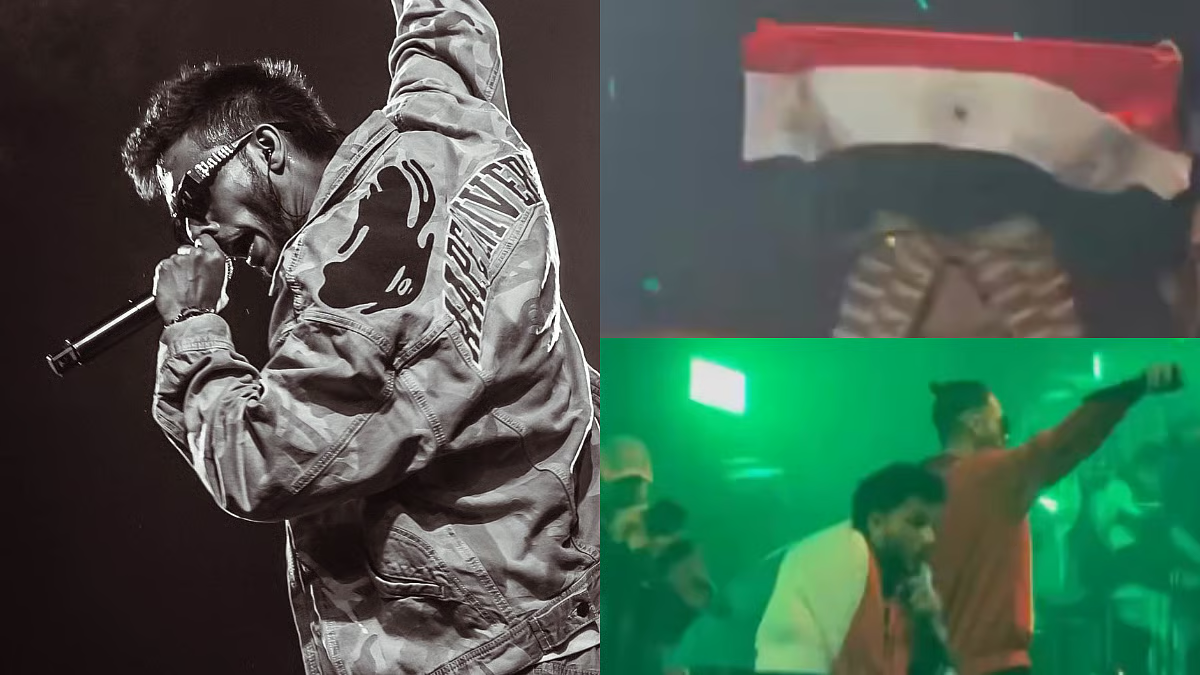
Talha Anjum isn’t just another name from Pakistan’s buzzing hip-hop scene—he’s a boundary-pushing artist who recently made headlines for a bold move that surprised fans across borders. At a live concert, the Karachi-born rapper waved the Indian national flag, sparking both admiration and outrage. But who is Talha Anjum, really? And why did one moment on stage ignite such a massive reaction?
A Journey from Karachi Streets to International Soundwaves
Talha Anjum, a Karachi native, co-founded the groundbreaking hip-hop duo Young Stunners in 2012 with fellow rapper Talha Yunus. They didn’t just make noise—they created a movement. Blending Urdu lyrics with hard-hitting hip-hop rhythms, they helped launch what many now call “Urdu rap.”
With relatable lyrics and raw expression, Anjum quickly built a fanbase among young Pakistanis eager to hear real stories told in their own language. Songs like “Gumaan,” “Quarantine,” and “Burger-e-Karachi” struck a chord, collecting millions of views and shaping the future of Urdu hip-hop.
What sets Talha Anjum apart in the hip-hop landscape is his commitment to authenticity. At a time when much of mainstream music leaned toward commercial formulas, Anjum and Young Stunners chose to focus on storytelling that reflected real-life experiences. Their lyrics often touch upon identity, ambition, societal pressure, and personal struggles, themes that resonate strongly with younger audiences navigating similar challenges.
The rise of digital platforms played a significant role in amplifying his reach. Platforms like YouTube and streaming services allowed his music to transcend geographical boundaries, connecting listeners across South Asia and beyond. Without relying heavily on traditional music industry structures, Anjum built a following organically, proving that talent combined with consistency can create a powerful impact.
His style also represents a fusion of global and local influences. While inspired by international hip-hop, he incorporates regional language, cultural references, and unique storytelling techniques. This blend has helped define a distinct identity for Urdu rap, positioning it as a growing genre on the global stage.
A Bold Moment in Mumbai
It was during one such performance in Mumbai that Talha Anjum did the unexpected: he waved the Indian flag. As the tricolor fluttered in his hands, the audience erupted in cheers, and, naturally, social media followed.
For many, the gesture felt symbolic—a sign that music could bridge divides. For others, especially in Pakistan, it was seen as crossing a line. The tension between India and Pakistan is no secret, and gestures like these often stir strong emotional responses. Even so, what stood out was Talha’s unapologetic presence. Whether spontaneous or planned, it was clear the moment meant something—perhaps to him, perhaps to the fans.
The moment in Mumbai can also be seen as a reflection of the changing dynamics of live performances. Concerts today are not just about music; they are experiences where artists connect with audiences on a deeper level. Gestures, interactions, and spontaneous moments often become as significant as the songs themselves, shaping how an event is remembered.
For many in the audience, the act symbolized more than just a performance—it felt like a celebration of shared culture. Music has long served as a bridge between communities, and such gestures can amplify that connection. In an environment filled with energy and emotion, the significance of the moment was heightened, making it a defining highlight of the event.
At the same time, such actions also demonstrate the influence artists hold. A single gesture on stage can spark conversations across countries, showing how cultural figures can impact public discourse. Whether interpreted as a statement or a spontaneous act, it underscores the power of visibility in shaping narratives.
Warnings from Authorities – The Story Behind the Scenes
Talha Anjum’s boldness isn’t new. He’s acknowledged facing warnings from certain authorities in Pakistan for expressing himself too openly. While he hasn’t revealed much about these encounters, fans believe the warnings were tied to his outspoken music and stage presence.
Anjum has always said that hip-hop is about truth and expression—even when it makes people uncomfortable. Whether it’s lyrics that touch on tough social issues or public gestures that blur political lines, Anjum has made it clear that art comes first.
Artists who push boundaries often find themselves navigating complex environments. In regions where cultural and political sensitivities are high, expression can sometimes attract scrutiny. For Talha Anjum, being vocal and unapologetic about his views places him in a position where his work is closely watched.
This dynamic is not unique to him but is a common aspect of artistic expression worldwide. Musicians, writers, and performers have historically used their platforms to question norms and highlight issues. While this can lead to recognition, it can also bring challenges, especially when the message challenges established narratives.
Despite these pressures, Anjum’s approach suggests a strong commitment to his craft. By continuing to create and perform, he reinforces the idea that art should remain a space for honest expression. This perspective resonates with audiences who value authenticity and courage in creative work.
Hero or Controversial Figure?
Interestingly, Talha Anjum has a huge fanbase in India despite political tensions. His music, often in Urdu—a language both nations understand—has helped him connect with Indian audiences. His bold gesture only deepened that connection for many.
But back home, opinions are split. While many appreciate the symbol of peace, others accuse Anjum of disrespect. The debate reflects broader questions: Can artists represent more than their national identity? Should music stay free from political boundaries?
Public figures often find themselves at the center of contrasting opinions, and Talha Anjum is no exception. For some, his actions represent a progressive outlook, emphasizing unity and shared cultural identity. For others, they raise questions about national representation and responsibility. This duality is a reflection of the diverse perspectives within society.
The debate also highlights the evolving role of artists in public discourse. In the past, entertainers were often expected to remain neutral, focusing solely on their craft. Today, however, audiences increasingly expect artists to engage with broader social and cultural issues, making their actions subject to greater scrutiny.
This situation also underscores the complexity of identity in a globalized world. As artists gain international recognition, they often navigate multiple cultural contexts. Balancing these influences while staying true to one’s roots can be both challenging and enriching, shaping how they are perceived by different audiences.
Music That Goes Beyond Borders
Talha Anjum’s moment wasn’t just about a flag. It tapped into the long-standing cultural connection between India and Pakistan, where music is one of the few shared spaces left. From qawwalis to now rap, art continues to unite people beyond politics.
Artists like Nusrat Fateh Ali Khan, Atif Aslam, and Ali Sethi, still loved on both sides of the border, have already shown how music can cross boundaries where humans can’t.
The enduring appeal of cross-border music lies in its ability to connect people through shared emotions. Language, rhythm, and storytelling create a universal experience that transcends political boundaries. For listeners, music becomes a space where differences fade, replaced by a sense of connection and understanding.
Talha Anjum’s work contributes to this tradition by bringing contemporary narratives into the mix. While earlier generations connected through classical and folk music, today’s audiences find resonance in genres like hip-hop, which address modern realities. This evolution reflects the changing nature of cultural exchange.
Collaborations and digital platforms have further strengthened these connections. Artists can now reach global audiences without physical limitations, allowing for a more inclusive and diverse musical landscape. This shift has opened new possibilities for cultural interaction, making music a powerful tool for bridging divides.
What’s Next?
Despite the controversy, Talha Anjum’s career is on an upward trajectory. With rising global interest in South Asian hip-hop, collaborations across countries, and millions of fans, he’s poised to keep making waves.
Criticism and backlash are expected—but one thing is clear: Talha Anjum won’t back down. Whether he’s waving a flag or spitting bars, he’s determined to speak his truth, and that makes him one of the most important voices in South Asian rap today.
Looking ahead, Talha Anjum’s trajectory suggests continued growth and exploration. As South Asian hip-hop gains international recognition, artists like him are at the forefront of representing the region on a global stage. This brings both opportunities and responsibilities, as they shape how the genre is perceived worldwide.
Future projects may see him experimenting with new sounds, collaborations, and themes. As artists evolve, they often seek to expand their creative boundaries, exploring different aspects of their identity and experiences. This process not only keeps their work fresh but also allows them to connect with a broader audience.
At the same time, navigating public perception will remain an important aspect of his journey. Balancing artistic freedom with audience expectations is a challenge that many successful artists face. How he manages this balance will play a significant role in defining the next phase of his career.
The reactions to his actions underscore the diversity of perspectives that exist within society. They remind us that art is not just about entertainment—it is also a space for expression, reflection, and sometimes, debate. This complexity is what makes it both powerful and challenging.
Ultimately, Talha Anjum’s impact lies in his ability to stay true to his voice while navigating a rapidly changing world. Whether through his music or his actions, he continues to spark conversations and connect audiences, reinforcing the idea that art has the potential to transcend boundaries and bring people together.