The highly anticipated supernatural thriller Jatadhara has finally hit theaters, and the early buzz on social media is electrifying. Starring Sudheer Babu alongside Bollywood actress Sonakshi Sinha, the film has quickly become a hot topic—especially due to Sonakshi’s transformation into a dark, mythic character that has left audiences both awestruck and intrigued.
Sonakshi Sinha in a New Avatar
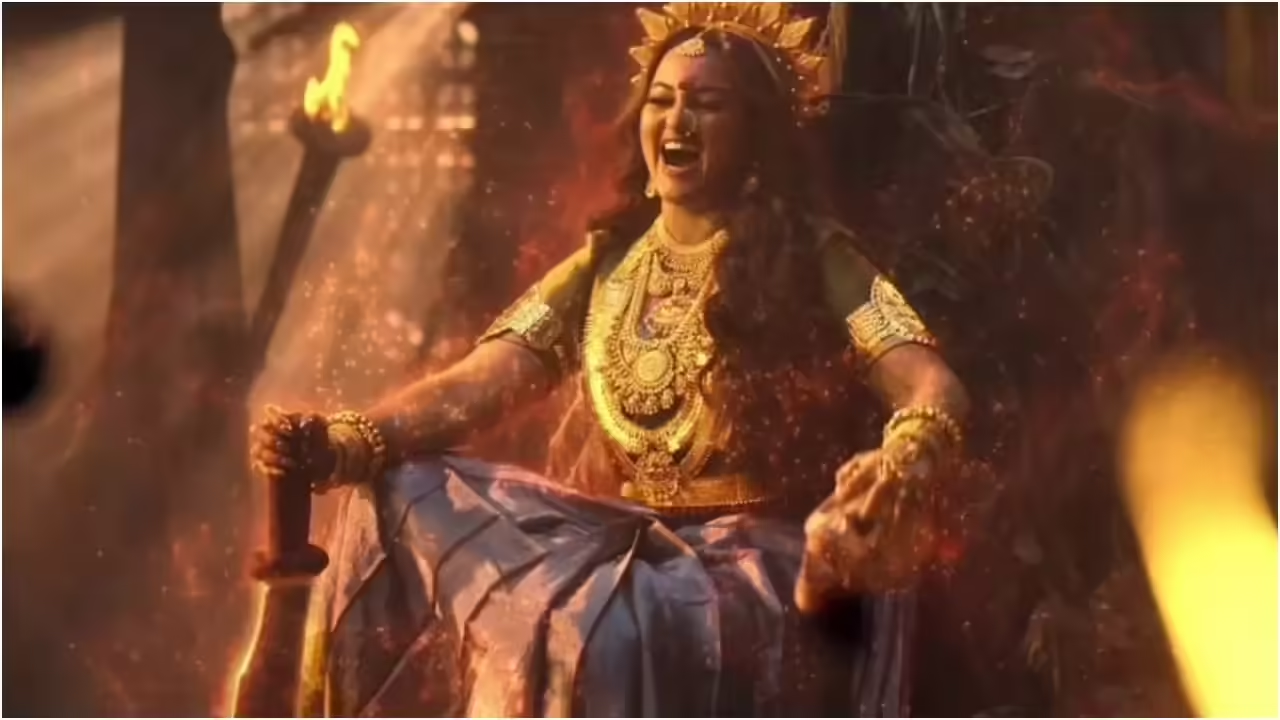
In Jatadhara, Sonakshi Sinha takes on the role of Dhana Pishachini, a powerful spiritual entity rooted in ancient mythology. This role is a bold departure from her previous screen persona. Fans and critics alike are praising her commanding presence, intricate costume design, and intense performance. Social media reactions describe her portrayal as a “spiritual experience” and “unlike anything seen before,” highlighting how shocking and captivating her transformation truly is.
Sonakshi has also shared the physical challenges of her role. She performed suspended in the air while wearing heavy traditional jewelry, demonstrating her dedication and bringing authenticity to the dark, mystical aura of her character.
Beyond just a visual transformation, Sonakshi Sinha’s role in Jatadhara represents a psychological shift that audiences rarely associate with her earlier filmography. She steps away from conventional hero-centric narratives and embraces a character that thrives in ambiguity — neither entirely evil nor entirely divine. This layered portrayal allows her to explore emotions like rage, grief, and spiritual power, all woven into a single character arc.
Another striking element is how the film uses silence and expression in her performance. There are moments where dialogue takes a backseat, and Sonakshi communicates purely through body language, eye movements, and controlled gestures. This restraint adds an eerie depth to her character, making her presence unsettling yet captivating at the same time.
Her preparation for the role also becomes evident in how she carries the physicality of Dhana Pishachini. The posture, slow movements, and controlled intensity reflect a deliberate effort to embody something beyond human. This commitment helps the audience suspend disbelief and fully immerse themselves in the mythological world created by the film.
Additionally, her transformation signals a conscious shift in her career trajectory. By choosing such unconventional roles, Sonakshi positions herself as an actor willing to experiment and push boundaries, rather than staying within the comfort zone of commercial cinema. This decision could redefine her image in the industry moving forward.
Audience Reactions on Social Media
The online response to Jatadhara has been overwhelmingly positive, with audiences expressing admiration, excitement, and awe. Key themes from social media reactions include:
Highlights: What Fans Loved
- Sonakshi’s Performance: Viewers are calling her portrayal of Dhana Pishachini one of her most memorable and powerful performances. Her intensity and depth have left a lasting impression.
- Visuals and Sound: The film’s sound design, visual effects, and elaborate sets have received praise. Many highlighted the cinematic experience, especially scenes inspired by Lord Shiva.
- Mythology Meets Modern Storytelling: Audiences appreciate the blend of ancient myths with contemporary thriller elements, keeping viewers engaged with suspense and spiritual themes.
- Entertainment Value: Many fans have labeled Jatadhara a “paisa-vasool” (value-for-money) entertainer, enjoying the mix of supernatural thrills, action, and suspense.
Criticisms: Areas for Improvement
- Pacing and Execution: Some viewers feel the narrative slows down in parts, affecting momentum.
- Screenplay Concerns: A few critics noted that the screenplay occasionally lacks coherence, which can dilute the mythological impact.
- Genre Expectations: While visually stunning, some viewers expected a tighter, more logically driven story.
Even with minor criticisms, the film’s spectacle and Sonakshi’s transformative performance remain the most praised aspects.
Apart from praise for performances and visuals, a major talking point online has been the film’s ability to create a strong atmosphere. Viewers have repeatedly mentioned how the background score and ambient sounds heighten tension, especially in scenes involving rituals and supernatural manifestations. The immersive audio design has contributed significantly to the film’s impact, making it more than just a visual spectacle.
Another interesting trend observed on social media is the rise of fan theories. Many viewers are actively discussing hidden meanings, symbolism, and possible interpretations of the story. This kind of engagement shows that the film has successfully sparked curiosity, encouraging audiences to think beyond what is shown on screen.
The film has also gained traction among younger audiences who enjoy visually rich and concept-driven cinema. Clips and short edits from the movie have been widely shared, particularly sequences featuring intense rituals or dramatic confrontations. This digital buzz has helped the film maintain visibility even after its release.
At the same time, discussions around cultural authenticity have also emerged. Some viewers appreciate the effort to portray mythological elements with seriousness and respect, while others debate the creative liberties taken by the filmmakers. This blend of admiration and critique reflects how deeply the film has engaged its audience.
What Makes Jatadhara Stand Out
Several elements set Jatadhara apart from other supernatural thrillers:
- Mythology with a Modern Twist: The film merges traditional rituals and temple lore with modern storytelling, offering more than just jump scares.
- Bold Casting Choice: Sonakshi’s decision to step into a Telugu-Hindi bilingual mythological thriller is daring. Her commitment to a dark, physically demanding role has impressed audiences and critics alike.
- Immersive Visuals: The detailed sets, elaborate costumes, and grand sequences create a cinematic experience that feels larger than life. Key scenes inspired by Lord Shiva have been particularly impactful.
One of the film’s strongest aspects is its commitment to building a distinct world. Rather than relying on generic horror tropes, Jatadhara creates a universe rooted in tradition, belief systems, and spiritual symbolism. This approach gives the story a sense of authenticity and depth that is often missing in mainstream supernatural thrillers.
The film also stands out for its use of practical effects combined with modern technology. Instead of depending entirely on CGI, certain sequences use real sets, lighting techniques, and physical props to enhance realism. This balance ensures that the supernatural elements feel grounded and believable.
Another notable feature is the film’s pacing of tension. Instead of constant jump scares, it builds unease gradually. The slow escalation of events keeps viewers engaged while allowing the narrative to develop organically. This method aligns more with psychological thrillers than conventional horror films.
The supporting cast also plays a crucial role in strengthening the film. Their performances add credibility to the narrative, ensuring that the story doesn’t rely solely on its lead characters. This ensemble effort contributes to a more cohesive cinematic experience.
Why Sonakshi’s Dark Avatar Shocked Viewers
Sonakshi’s transformation left audiences stunned for several reasons:
- Visual Impact: Her elaborate makeup, costume, and jewelry contrast sharply with her previous roles.
- Psychological Depth: The character goes beyond a typical villain, carrying spiritual and mythic depth.
- Narrative Centrality: Dhana Pishachini drives the story, not just a secondary antagonist, amplifying her importance.
- Physical Dedication: Sonakshi’s commitment to performing challenging sequences adds authenticity and weight to her performance.
This mix of factors makes her role one of the most memorable performances in recent Indian cinema.
A significant reason behind the audience’s reaction is the unpredictability of her character. Unlike traditional antagonists, Dhana Pishachini does not follow a straightforward path. Her actions often challenge moral boundaries, making it difficult for viewers to categorize her as purely good or evil. This unpredictability keeps audiences on edge.
Her transformation also challenges audience expectations built over years of watching her in mainstream roles. The stark contrast between her previous image and this dark portrayal amplifies the shock factor. It creates a sense of novelty that draws viewers into the film.
Another factor is the emotional complexity of the character. The story hints at a deeper backstory that explains her motivations, adding layers to her persona. This emotional grounding prevents the character from becoming one-dimensional, making her more compelling.
The visual symbolism associated with her character also leaves a lasting impression. Elements like lighting, costume details, and specific rituals are used to enhance her mystique. These artistic choices contribute to the overall impact of her transformation.
Final Verdict: Should You Watch It?
Based on early social media reactions, Jatadhara is successfully capturing audience attention. For fans of mythology-driven thrillers, supernatural horror, and strong performances, the film is a must-watch. Many have even described the experience as “spiritual”, emphasizing its emotional and visual impact.
That said, viewers looking for tightly structured storytelling or subtle narratives may find certain elements less satisfying. The film leans heavily on spectacle, mythology, and character intensity, prioritizing a sensory experience over a conventional thriller structure.
For Sonakshi Sinha, this role may be a career milestone, showcasing her versatility and ability to tackle complex, dark characters. For audiences, Jatadhara offers a thrilling and visually stunning journey into the world of supernatural cinema.
For viewers who appreciate cinematic experimentation, Jatadhara offers a refreshing departure from formula-driven storytelling. It attempts to blend genres, combining elements of horror, mythology, and psychological drama into a single narrative. This hybrid approach may not appeal to everyone, but it certainly adds uniqueness to the film.
The movie also serves as an example of how Indian cinema is evolving. Filmmakers are increasingly exploring unconventional themes and storytelling techniques, moving beyond traditional formats. Jatadhara reflects this shift, showing a willingness to take creative risks.
Another important aspect is the film’s ability to provoke discussion. Whether it’s about performances, storytelling choices, or thematic elements, the movie encourages conversation. This engagement is a positive sign, indicating that the film has resonated with audiences on multiple levels.