Masti 4 Trailer Reactions: Vivek Oberoi, Aftab, and Riteish Under Fire
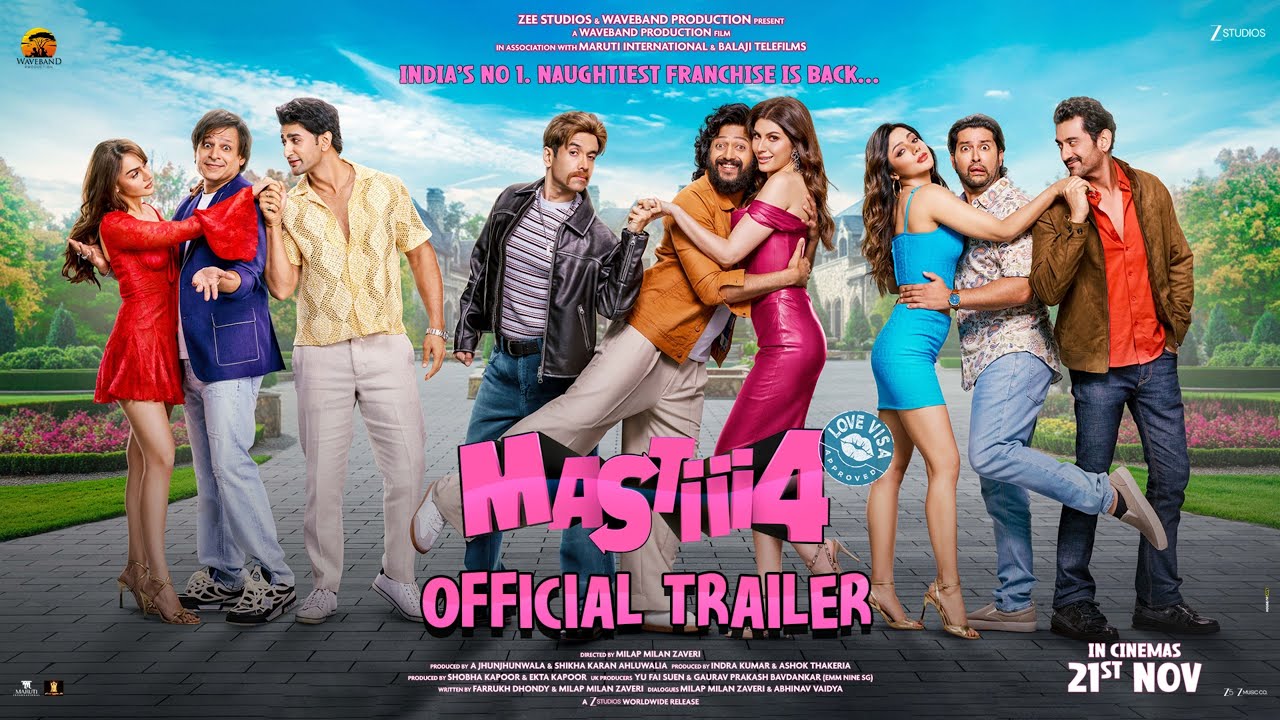
The excitement around the upcoming comedy Masti 4 took an unexpected turn this week after its trailer dropped. Fans had hoped for a fun-filled glimpse of the star-studded cast—Vivek Oberoi, Aftab Shivdasani, and Riteish Deshmukh—but instead, the trailer sparked widespread criticism online. Social media erupted with reactions, with many questioning not just the humor but the very essence of the film’s content.
A Look Back at the Masti Franchise
For years, the Masti franchise has been synonymous with adult comedy in Bollywood, blending slapstick humor with risqué situations.
- Original Masti (2004): Directed by Indra Kumar, it carved a niche with its bold, edgy humor.
- Sequels: Continued the trend of adult comedy, heavily relying on sexual innuendos and situational jokes.
However, it seems Masti 4 may have pushed the formula past its prime.
The Masti franchise has long occupied a distinct space in Bollywood’s comedy landscape. When the original film released in 2004, it arrived at a time when mainstream Hindi cinema was experimenting with bolder themes and narratives. The film leaned heavily into adult humor, relying on misunderstandings, flirtation, and exaggerated situations to generate laughs. For its time, it felt edgy and different, attracting audiences who were curious about a genre that had not been widely explored in mainstream Bollywood.
As the franchise progressed with sequels, it built a brand identity around irreverent humor. The films became known for pushing boundaries, often prioritizing shock value over subtlety. While this formula worked initially, the entertainment ecosystem has evolved significantly since then. What was once considered daring is now often viewed through a more critical lens, especially in a society that is increasingly aware of issues like representation, consent, and respect.
The challenge for Masti 4 lies in navigating this shift. The expectations from audiences today are vastly different, and humor that once seemed harmless may now be scrutinized for its underlying messages. This makes it crucial for long-running franchises to reinvent themselves while retaining their core appeal. Without this balance, they risk feeling outdated in a rapidly changing cinematic landscape.
Trailer Highlights and Viewer Reactions
The trailer runs just over two minutes, introducing the three leads in familiar roles:
- Vivek Oberoi: Plays a charming but flawed character.
- Aftab Shivdasani: The comic foil.
- Riteish Deshmukh: Uses his signature exaggerated expressions and physical comedy.
While the intention was humor, viewers argue the content feels outdated and tone-deaf.
Social media reactions were swift:
- Many questioned how the actors could support humor considered offensive today.
- Popular comments included:
- “How do they face women after this?”
- “This isn’t funny anymore; it’s just uncomfortable.”
The trailer for Masti 4 attempts to recreate the familiar chaos that defined the earlier films. It introduces the trio of lead characters in situations that quickly spiral into comedic confusion, filled with double entendres and exaggerated scenarios. The pacing is fast, with a barrage of jokes delivered in quick succession, aiming to keep viewers engaged.
However, instead of laughter, many viewers expressed discomfort. The humor, which relies heavily on suggestive content, was seen by some as repetitive and lacking innovation. In an era where audiences are exposed to a wide range of global content, expectations for originality have risen. Simply repeating a formula that worked in the past is no longer sufficient to capture attention.
Social media played a significant role in amplifying these reactions. Within hours of the trailer’s release, discussions began trending across platforms, with users sharing their opinions, critiques, and even memes. This immediate feedback loop highlights how quickly public sentiment can form and spread, influencing the perception of a film even before its release.
Critics Point Out a Lack of Freshness
Several critics observed that Masti 4 recycles old gags without adapting to modern sensibilities.
- Audiences today are more aware of gender representation and relationships on screen.
- Humor trivializing consent or objectifying women is increasingly unacceptable.
One of the most consistent criticisms directed at the trailer is its perceived lack of novelty. Many viewers feel that the jokes and scenarios are reminiscent of earlier installments, without any meaningful update to suit contemporary tastes. This repetition can make the film feel predictable, reducing its impact on audiences who are looking for something new.
The evolution of comedy as a genre also plays a role in shaping these expectations. Modern audiences often appreciate humor that is layered, situational, or rooted in real-life experiences. Films that combine comedy with social commentary or emotional depth tend to resonate more strongly, as they offer more than just surface-level entertainment.
In contrast, humor that relies solely on innuendo or exaggerated situations may struggle to maintain relevance. This does not mean that such humor has no place, but it does require careful execution to ensure it aligns with current sensibilities. Without this adaptation, even established franchises can find themselves disconnected from their audience.
Questions Around the Cast
The backlash also raised concerns about the actors themselves:
- Vivek Oberoi: Known for varied roles, yet chose a project seen as socially tone-deaf.
- Aftab Shivdasani: Appears to be repeating past light-hearted performances.
- Riteish Deshmukh: Despite his comic timing, critics called his performance “lazy” and “uninspired.”
The involvement of experienced actors like Vivek Oberoi, Aftab Shivdasani, and Riteish Deshmukh has added another layer to the discussion. Each of these actors has demonstrated versatility in their careers, taking on a range of roles across genres. Their decision to return to a franchise known for a specific style of humor has prompted questions about creative choices and career direction.
For Riteish Deshmukh, who is widely appreciated for his comedic timing, expectations are particularly high. Audiences often look to him to elevate the material, bringing freshness and energy to his performances. Similarly, Vivek Oberoi and Aftab Shivdasani have the experience to explore diverse roles, making their participation in a project perceived as repetitive a point of discussion.
This scrutiny reflects a broader trend where audiences are increasingly invested in the creative decisions of actors. With greater access to information and platforms for discussion, viewers feel more connected to the industry, leading to more engaged and sometimes critical responses.
Industry Perspective
Industry insiders believe Masti 4 may have misjudged audience expectations:
- Bollywood comedy has evolved, with films like Chhichhore and Badhaai Do blending humor with social themes.
- In contrast, Masti 4 relies on shock value and innuendo, which feels outdated.
Interestingly, controversy may boost attention:
- Historically, the franchise benefited from curiosity-driven viewership.
- Negative reactions often increase buzz, but social media now amplifies criticism faster than ever, potentially influencing box office performance.
From an industry standpoint, the reaction to the Masti 4 trailer highlights the challenges of balancing nostalgia with innovation. Established franchises often rely on their existing fan base, but they also need to attract new audiences. This requires a careful blend of familiar elements and fresh ideas, ensuring that the film feels both recognizable and relevant.
There is also the consideration of market dynamics. Comedy remains a popular genre, but it is also highly competitive. With the rise of digital platforms and diverse content, audiences have more choices than ever before. This means that films must work harder to stand out, offering something unique that captures attention.
At the same time, controversy can sometimes work in favor of a film by increasing visibility. Discussions, debates, and even criticism can generate curiosity, prompting audiences to watch the film and form their own opinions. However, this is a double-edged sword, as negative perceptions can also deter potential viewers.
Criticism of Female Representation
A significant point of concern is the treatment of women:
- Female characters are shown primarily as props for male humor.
- Critics argue this is regressive and alienates a large segment of the audience.
Another significant aspect of the backlash is the portrayal of female characters. Critics argue that the trailer does not reflect the progress that has been made in terms of representation in cinema. In recent years, there has been a growing emphasis on creating well-rounded, meaningful roles for women, moving away from stereotypes and one-dimensional portrayals.
Filmmakers’ Response
The team behind Masti 4 has remained largely silent:
- Focus is on conventional promotion rather than engaging with criticism.
- Silence may prevent amplification but risks letting negative narratives dominate public perception.
Will Masti 4 Find Its Audience?
Despite backlash, fans of the franchise may still enjoy it:
- Light-hearted escapism appeals to audiences seeking humor without scrutiny.
- Box office success will depend on balancing classic slapstick with modern sensibilities.
Conclusion
The Masti 4 trailer has sparked debate far beyond the film itself:
- Highlights evolving standards of comedy, gender representation, and audience expectations.
- Vivek Oberoi, Aftab Shivdasani, and Riteish Deshmukh may have miscalculated the current landscape.
- Whether Masti 4 entertains without offending remains to be seen, but one thing is clear: the trailer has ignited conversation—and controversy—on an unprecedented scale.