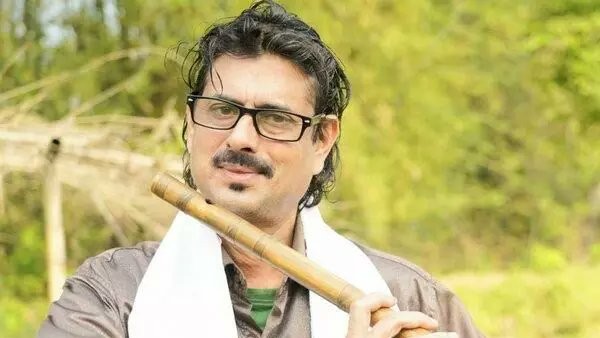
The world of Indian classical music has lost one of its most soulful voices. Deepak Sarma, Assam’s celebrated flautist and music director, passed away at the age of 57 after battling a prolonged liver ailment. His passing on Monday morning in Chennai has left a deep void in the hearts of music lovers across Assam and beyond.
Early Life and Musical Beginnings
Born on August 23, 1968, in Panigaon (now part of Assam’s Nalbari district), Deepak Sarma’s tryst with music began early in life. Initially drawn to rhythm, he started learning the tabla under Guru Adya Sharma while studying at the Nalbari Art School. His dedication was evident even in his school days at Bongaon High School, where he often took part in cultural programs and local performances.
After completing his schooling, Sarma enrolled at Gauhati Commerce College, but music continued to dominate his heart. During this time, he discovered his true passion — the flute. Captivated by its purity and emotional depth, Sarma chose to dedicate his life to mastering it.
He began his formal training under Guru Prabhat Sharma in Guwahati, learning the fundamentals of Hindustani classical flute. Later, he pursued a Master’s degree in Instrumental Music (Flute) from Rabindra Bharati University, Kolkata, under the guidance of Debu Banerjee. His talent and dedication eventually earned him the honor of becoming a disciple of Pandit Hariprasad Chaurasia, one of India’s most revered flautists. That mentorship shaped him into a musician of rare grace and sensitivity.
Even as a child, Sarma displayed an unusual sensitivity to sound. Family members often recalled how he would spend hours listening to traditional Assamese melodies and trying to recreate them using whatever instruments he could find. This early curiosity laid the foundation for his lifelong musical journey.
His transition from tabla to flute was not just a change of instrument but a transformation in artistic expression. While rhythm gave him structure, the flute allowed him to explore emotion and storytelling in a more fluid way. This shift proved to be a defining moment in his career, shaping the direction of his future work.
During his training years, Sarma was known for his disciplined routine. He would practice for long hours, focusing on breath control, tonal clarity, and improvisation. His dedication set him apart from his peers, earning him admiration from both teachers and fellow students.
Exposure to different musical traditions during his time in Kolkata also broadened his perspective. He absorbed influences from various gharanas, blending them into his own style. This openness to learning became a hallmark of his artistry, enabling him to evolve continuously.
Rise to Prominence
After completing his studies, Deepak Sarma returned to Assam, where he began a prolific career as a performer, teacher, and composer. He became an empanelled artist with All India Radio (AIR) and Doordarshan, Guwahati, becoming the first Assamese classical flautist to receive a B-High grade from AIR — a major recognition of his skill and artistry.
Sarma’s music transcended borders. He performed extensively across India and internationally, captivating audiences in South Africa, Seychelles, France, and Germany. His performances were known for their emotional intensity, technical mastery, and seamless fusion of classical ragas with modern expression.
Beyond concerts, Sarma made a name for himself as a music director in the Assamese film industry. He composed for films like Jonky Panoi, Jatinga Ityadi, and Luitak Vetibo Kune, blending classical influences with Assamese folk and cinematic sounds.
He also collaborated with Assamese legends such as Dr. Bhupen Hazarika and Zubeen Garg, cementing his legacy as one of the region’s most respected and versatile musicians.
As his reputation grew, Sarma became a familiar face at prestigious music festivals and cultural events. His performances were not just concerts but immersive experiences that connected deeply with audiences. Listeners often described his music as meditative, capable of evoking a wide range of emotions.
He also played a crucial role in promoting classical music in Assam, where the genre had limited visibility. By organizing workshops and participating in local events, he helped create a platform for aspiring musicians. His efforts contributed significantly to the growth of classical music in the region.
Sarma’s versatility allowed him to experiment with different styles without losing his classical roots. He seamlessly incorporated elements of folk music into his compositions, creating a unique sound that resonated with diverse audiences. This ability to innovate while staying grounded in tradition set him apart from many of his contemporaries.
In addition to his artistic achievements, Sarma was deeply committed to education. He mentored numerous students, many of whom have gone on to establish themselves in the field of music. His teaching style emphasized not just technique but also the emotional and spiritual aspects of music.
Awards and Achievements
Deepak Sarma’s talent and contributions were widely celebrated. Among his many accolades were:
- Best Musician of the Year (2006)
- Sangeet Prabha Award (2007)
- Assam Sports Cultural Jury Award (2007)
- Jams of Assam (2008)
- Azim Hazarika Award (Sivasagar Press Club)
Each recognition reflected not just his technical brilliance but his commitment to preserving and promoting Assamese music on the global stage. His versatility — spanning classical, devotional, and cinematic compositions — made him a musical bridge between generations.
Beyond the awards mentioned, Sarma’s contributions were recognized by several cultural organizations and institutions. He was frequently invited as a guest performer and speaker at music conferences, where he shared his insights and experiences with younger artists.
His recordings and compositions have also been preserved in archives, ensuring that his work continues to inspire future generations. These recordings serve as valuable resources for students of classical music, showcasing his mastery and unique style.
Sarma’s achievements were not limited to individual accolades. He played a key role in elevating the status of Assamese music on national and international platforms. His success brought greater attention to the rich cultural heritage of the region.
What made his recognition truly meaningful was the respect he earned from his peers. Fellow musicians often praised his humility and dedication, considering him not just a performer but a true ambassador of music.
Illness and Passing
In his later years, Deepak Sarma battled a chronic liver disease. Despite his health struggles, he continued to teach and perform, inspiring students through his perseverance and love for music. When his condition worsened, he was flown to Chennai for advanced treatment.
Tragically, on November 3, 2025, at around 6:15 a.m., the maestro passed away in a Chennai hospital. His body was brought back to Guwahati, where thousands of admirers gathered to pay their respects.
A public homage was organized at the Seuj Sangha premises in Ambikagiri Nagar, followed by his last rites at Navagraha crematorium, conducted with full state honors. The ceremony was a poignant reflection of the immense love and respect he had earned throughout his life.
Despite facing health challenges, Sarma remained deeply connected to his art. Music was not just a profession for him but a source of strength and solace. Even during difficult times, he found comfort in practicing and teaching, demonstrating his unwavering commitment.
Those close to him recall how he maintained a positive outlook despite his illness. He continued to encourage his students, often reminding them of the importance of perseverance and passion. His resilience became an inspiration to many.
The news of his passing came as a shock to the music community. While his health issues were known, his dedication to music made it hard for many to imagine a world without him. His demise marked not just the loss of an artist but the end of a significant chapter in Assamese music.
The large turnout at his final rites reflected the profound impact he had on people’s lives. From fellow musicians to ordinary listeners, countless individuals came together to honor his memory and celebrate his legacy.
Tributes from Across the Country
Messages of grief and admiration poured in from all corners of India. Political leaders, cultural icons, and fellow musicians described Sarma as one of Assam’s brightest artistic stars. The Governor of Assam called his passing an “irreparable loss to the state’s cultural heritage.”
Musicians and students remembered him as a gentle soul, a patient teacher, and a passionate artist. To his disciples, he was more than a mentor — he was a guiding light who embodied humility, discipline, and devotion to the art form.
Legacy and Influence
Deepak Sarma’s legacy continues to resonate through his music, teachings, and disciples. He skillfully bridged the world of Hindustani classical music with the folk essence of Assam, creating a sound that was both traditional and deeply local.
His distinctive playing style — marked by purity of tone and soulful phrasing — elevated the flute as a vehicle for emotion, storytelling, and spiritual expression. Through workshops, lectures, and mentorship across Northeast India, Sarma nurtured a new generation of musicians and ensured that classical music remained alive and relevant.
What made him special was his universal language — a music that transcended boundaries, blending ragas and regional rhythms into melodies that spoke directly to the heart.
Remembering the Man Behind the Music
Those close to Deepak Sarma describe him as soft-spoken, humble, and deeply spiritual. Despite fame and recognition, he remained grounded and accessible, believing that music was a divine calling rather than a profession.
Even during his illness, he continued to practice daily, never letting his devotion fade. His passing leaves an irreplaceable gap in the Indian classical world — yet his life stands as a beacon of passion, perseverance, and artistic integrity.
Conclusion
Deepak Sarma’s passing marks the end of an era for Assam’s cultural community. Yet, his music — pure, serene, and timeless — will forever echo through the land he loved.
His flute was not just an instrument; it was his voice, his soul, and his offering to the world. As the melodies of the Brahmaputra continue to flow, so too will the memory of this gentle maestro whose music touched countless lives.
Deepak Sarma may have left this world, but his music will live on — in every note, in every breath, in every heart that listens.