After Dharmendra, Hema Malini Reveals She Was Ready for On-Screen Kissing Scenes: “Bilkul Karenge…”
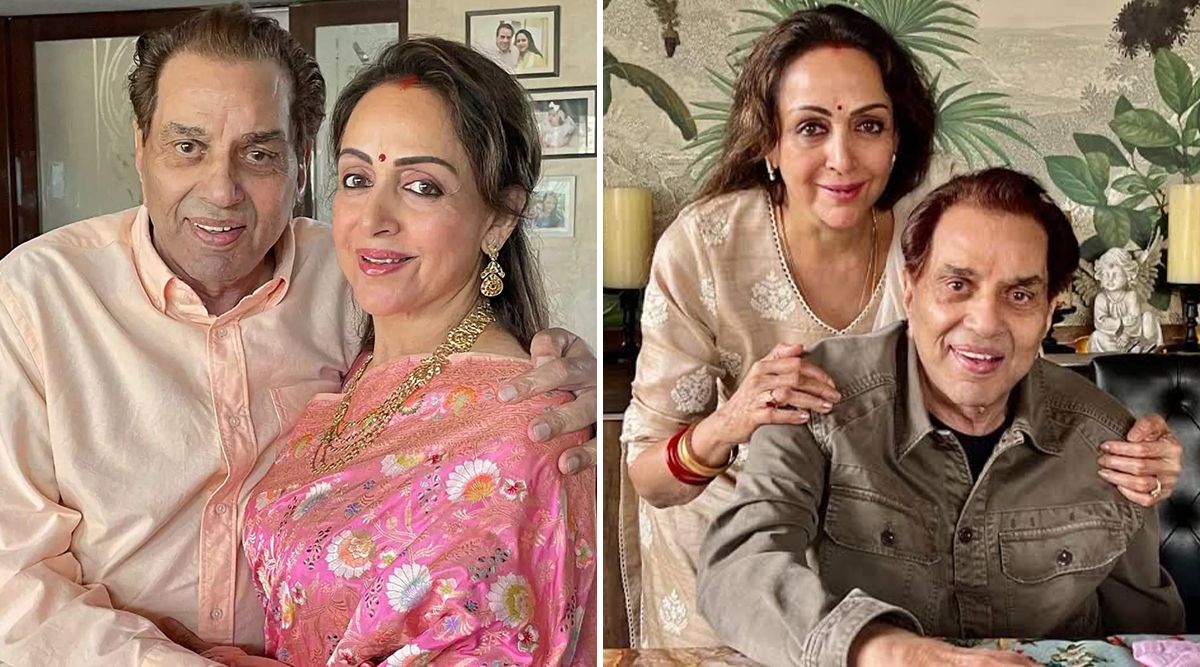
For decades, Hema Malini has represented an era of grace, beauty, and magnetic screen presence that very few stars have been able to match. Popularly known as the “Dream Girl,” her cinematic journey is filled with iconic roles, memorable songs, and performances that continue to inspire today’s generation of actors. Yet, even after all these years, Hema Malini still surprises audiences with her honesty and unfiltered reflections about her career.
Her recent statement about being ready for on-screen kissing scenes if a script demanded it has once again sparked conversations across the film industry. The revelation comes shortly after Dharmendra, her husband and legendary actor, openly spoke about his own comfort with intimate scenes on screen. Now, Hema Malini’s candid remarks offer a fresh perspective on how Bollywood’s top artists have navigated evolving cinematic norms.
A Surprising and Refreshing Confession
Speaking in a recent interview, Hema Malini addressed the long-standing curiosity around why she never participated in kissing scenes during her peak years, despite playing romantic roles opposite the biggest male stars of her time.
With a calm smile and unmistakable confidence, she revealed that she had no personal objections to performing kissing scenes. In fact, she said she would have done them “bilkul karenge”—absolutely—if the storyline genuinely required the moment and if it contributed meaningfully to the emotion of the narrative.
This unexpected statement has quickly become the talk of the town, not because it is controversial, but because it reflects an evolving mindset—one that challenges the myths surrounding the actress and the restrictions of earlier filmmaking styles.
What makes Hema Malini’s statement particularly compelling is the quiet confidence with which she expressed it. There was no attempt to sensationalize her words or create controversy. Instead, her tone reflected calm maturity—an understanding that cinema, at its core, is storytelling. Her willingness to consider on-screen intimacy as part of a narrative rather than a taboo demonstrates a perspective that feels surprisingly modern, even decades after her peak.
For many fans, the “Dream Girl” has always been associated with elegance and restraint. Her roles often embodied traditional values, making her revelation feel unexpected. However, her statement reveals a deeper truth—that her choices were not driven by discomfort, but by the limitations of the era and the expectations placed upon her. This distinction is important, as it challenges the long-held assumption that actresses of her time were personally opposed to such scenes.
Why the Revelation Matters Today
Hindi cinema has changed significantly over the years. Intimacy on screen, once considered taboo, is now handled with more nuance and realism. Actors today work with intimacy coordinators, directors emphasize consent and comfort, and many mainstream scripts incorporate love and desire in more expressive ways.
Hema Malini’s revelation bridges two worlds:
- The world she belonged to, where an actress’s choices were tightly scrutinized, and the audience often expected her on-screen persona to match her off-screen image.
- And the world she is observing today, where professional boundaries and creative expression have widened dramatically.
Her statement becomes crucial in understanding how actresses of her generation managed their public image while balancing artistic choices.
In today’s cinematic landscape, intimacy is no longer treated as a shock factor but as an integral part of storytelling when required. Directors and actors approach such scenes with professionalism, often involving detailed discussions, rehearsals, and consent protocols. Hema Malini’s perspective aligns perfectly with this modern approach, reinforcing the idea that artistic expression evolves, but its foundation—authentic storytelling—remains constant.
Her comments also resonate in an era where conversations about consent and comfort in filmmaking have become more prominent. The presence of intimacy coordinators, structured guidelines, and a more respectful work environment ensures that actors can make informed choices. In this context, her statement feels like a bridge connecting the past and present, showing that the intent to approach intimacy professionally existed even earlier, though the industry lacked the framework to support it.
The Context: Dharmendra’s Earlier Statement
Interestingly, her revelation comes not long after Dharmendra himself received attention for an on-screen kiss he performed in a recent film. When asked about it, the veteran actor responded with remarkable openness, saying that one must follow what a scene demands. He expressed that storytelling sometimes requires boldness, and he sees no issue with portraying genuine affection on screen.
This prompted many fans and film commentators to wonder how Hema Malini viewed such moments. Her response has now clarified that she, too, held a mature, professional approach toward intimate scenes—something many might not have expected due to her clean, traditional, and often conservative image crafted in earlier decades.
Dharmendra’s recent remarks about his own comfort with on-screen intimacy sparked a wave of discussions, primarily because of his longstanding image as a romantic yet traditional hero. His candidness, combined with his enduring charm, surprised many fans who associate him with classic Bollywood values. His statement, however, reinforced the idea that acting is about authenticity, regardless of age or image.
When placed alongside Hema Malini’s perspective, the conversation becomes even more intriguing. Both actors, who have been pillars of Indian cinema for decades, share a similar outlook—one that prioritizes storytelling over societal judgment. Their views highlight a shared understanding of cinema as a medium of expression rather than a platform bound by rigid norms.
A Time When Kissing Was a Cinematic Taboo
To fully understand the weight of Hema Malini’s confession, one must remember how restricted mainstream cinema was during the era when she was at the peak of her career.
Back in the 1970s and 1980s, even holding hands or leaning too close was shot with exaggerated modesty. Directors relied heavily on symbolism—the fluttering curtain, the blooming flowers, the darkening screen—to represent moments of romance or intimacy.
Actresses were expected to maintain a certain “purity” in their on-screen image. A kissing scene was not just a professional choice; it could affect an actor’s reputation, endorsements, and even their marriageability in the public eye. The audience, too, had rigid expectations, making actresses hesitant to push boundaries even if they personally had no objection.
Given this backdrop, Hema Malini’s recent remark suddenly becomes more than a casual comment; it becomes a reflection on how filmmaking constraints, not personal discomfort, influenced her choices.
How Fans and the Industry Reacted
The moment her statement surfaced, social media buzzed with reactions. Many fans were surprised but appreciative of her honesty. Younger audiences viewed it as an example of progressive thinking, especially from someone belonging to an earlier generation of cinema legends.
Film critics, meanwhile, praised her transparency, pointing out that her remarks offer valuable insight into the pressures actresses faced—pressures that are seldom discussed openly.
Industry insiders also noted that her revelation dismantles outdated stereotypes about female actors of the past. It highlights that many of them were prepared to explore deeper emotional layers on screen, but were limited due to societal expectations and censorship norms.
Hema Malini’s Thoughtful Approach
What stood out most in her interview was not the statement itself, but the way she framed it. She emphasized:
- The importance of storytelling
- The necessity of artistic honesty
- The actor’s responsibility to serve the script
- And above all, personal dignity
She made it clear that she would have agreed to a kissing scene only if it added genuine emotion or significance to the moment—not for sensationalism.
This practical, grounded approach reflects the professionalism that defined her entire career. Hema Malini has always balanced tradition with modernity, sensitivity with strength, and glamour with elegance. Her latest comments fit perfectly into this persona.
What This Means for Women in Cinema
Hema Malini’s statement also opens a meaningful conversation about how actresses—past and present—navigate the demands of cinema.
Her candidness:
- Empowers younger artists to view intimacy on screen as a creative tool rather than a stigma.
- Encourages directors and audiences to rethink how they interpret an actress’s choices.
- Highlights the importance of autonomy, consent, and professionalism.
The fact that she felt ready for such scenes decades ago, but was constrained by outside pressures, serves as a reminder of how far the industry has come, and how much further it can progress in respecting artistic freedom.
A Legacy That Continues to Evolve
Ultimately, Hema Malini’s revelation is not just about whether she would or would not perform a kissing scene. It is about the evolution of cinema, the shifting expectations of audiences, and the journey of an actress who continues to remain relevant, respected, and admired across generations.
Hema Malini’s career is a testament to adaptability and resilience. From her early days as a leading actress to her current role as a respected public figure, she has consistently evolved while staying true to her identity. Her recent statement adds another layer to her legacy, showing that she remains engaged with the changing dynamics of cinema.
Her willingness to speak openly about topics that were once considered taboo reflects a broader shift in how the industry approaches conversations about art and expression. It also highlights her relevance in a rapidly changing world, where authenticity and honesty are increasingly valued.
For fans, her journey serves as an inspiration. It reminds us that growth is not limited to a particular phase of life but is an ongoing process. By embracing change and reflecting on her experiences, Hema Malini continues to contribute to the evolving narrative of Bollywood.